Case study area profiles:
Antwerp – Athens – Budapest – Copenhagen – Istanbul – Leipzig – London – Milan – Paris – Rotterdam – Tallinn – Toronto – Warsaw – Zurich
ZURICH
Zurich is the largest city in Switzerland and is located in north-central Switzerland at the north-western tip of Lake Zurich. Permanently settled for around 2000 years, the history of Zurich goes back to its founding by the Romans. Before 1893, the boundaries of the city were more or less synonymous with the location of the old town. Then, two large expansions took place in 1893 and 1934, when the city merged with many surrounding communes. Today, the city is divided into twelve districts, each containing between one and four neighbourhoods.
Zurich is among the world’s largest financial centres – it hosts the headquarters of most Swiss banks and of a vast number of international companies. By far the most important sector in the economy of Zurich is the service industry, which employs nearly four-fifths of workers. Other important industries include light industry, machine and textile industries and tourism. Furthermore, Zurich is a mixed hub for railways, roads, and air traffic – both Zurich airport and railway station are the largest and busiest in the country.
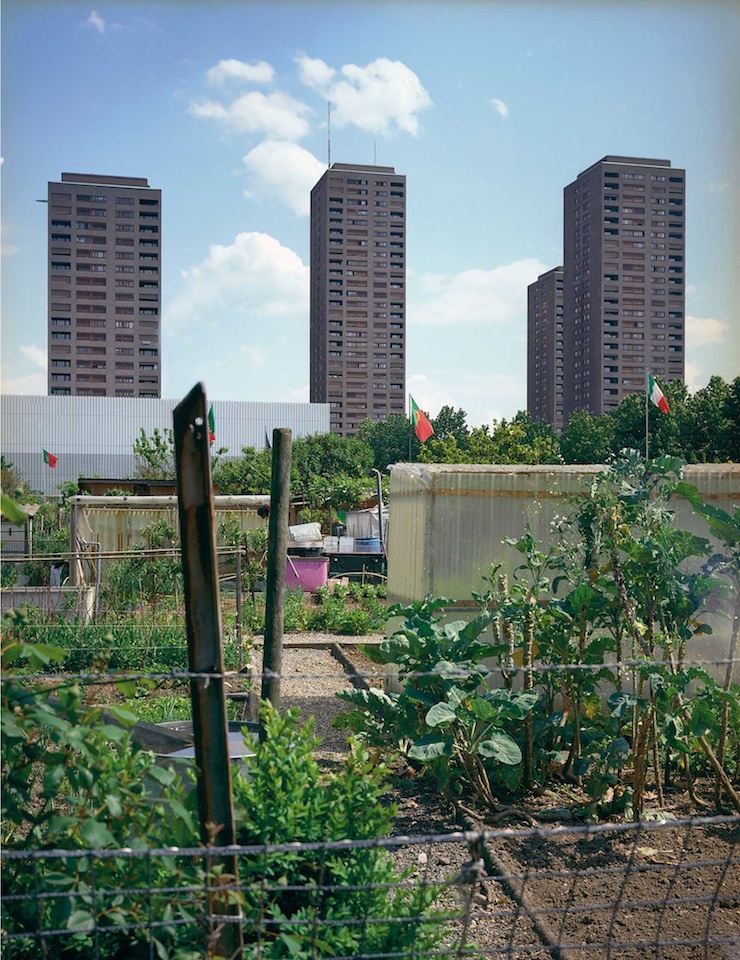
Zurich is a culturally and ethnically diverse city – 31% of the city’s population are foreign nationals, 39% are born abroad and 61% have a migration background. So, Zurich is a melting pot of different cultures, languages and religions. Diversity is a reality, a matter of course, and it has shaped city life for several decades. In terms of quality of life, Zurich regularly ranks highly in international surveys.
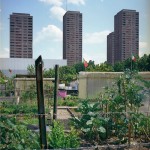
A very diverse and dynamic environment of the city of Zurich is the area that incorporates the two bordering Districts 4 and 9.
District 4, known as Aussersihl, lies between the Sihl River and the train tracks leaving Zurich railway station, and contains the neighbourhoods of Werd, Langstrasse and Hard. The area of Aussersihl was built up during the 18th century and quickly grew into a town during industrialisation, mostly inhabited by factory workers. It was incorporated into the Zurich municipality in 1893. Historically inhabited by migrant workers, the Aussersihl district, especially its Langstrasse quarter, remains notorious for its high quota of foreign nationals, a comparably high crime rate, prostitution and drug dealing.
District 9 is between the Limmat River to the north and the Üetliberg mountain to the south. In the west, it borders on District 4. District 9 contains the neighbourhoods of Altstetten and Al-bisrieden. Both entities were formerly small farming villages and municipalities of their own, but were incorporated into the Zurich municipality in 1934. While Altstetten today is an urban and diverse neighbourhood with a high quota of social housing and a comparably high percentage of foreign nationals, Albisrieden remains a quiet residential area.
-
- Source: Administration of the city of Zurich, 2008
Key Statistics: