|
NETHERLANDS: Utrecht University
|
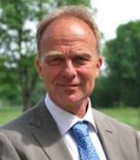 |
Ronald van Kempen (1958) is the Coordinator of DIVERCITIES. He is a Professor of Urban Geography at Utrecht University, Faculty of Geosciences. He holds an MA in Urban Geography (1986) and a PhD in Urban Geography (1992). His current research focuses on urban spatial segregation, neighbourhood developments, urban governance and its effects on neighbourhoods and residents, social exclusion, and minority ethnic groups. He has coordinated several large projects, e.g. the EU 5th-Framework RESTATE project (the comparison and future of 29 post-WWII housing estates in ten European countries).
|
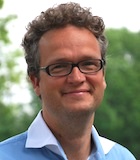 |
Gideon Bolt (1971) is Assistant Professor of Urban Geography, Methods and Techniques and holds a PhD from Utrecht University. His research focuses on urban policy, residential segregation, and neighbourhood choice. He is editor of Journal of Housing and the Built Environment. He has been guest (co-)editor of four recent special issues closely linked to the subject of this project: Combating residential segregation of ethnic minorities (Journal of Housing and the Built Environment 2009), Housing policy and (de)segregation: An international perspective (Housing Studies 2010), Linking integration and residential segregation (Journal of Ethnic and Migration Studies 2010), Mixing Neighbourhoods: Success or Failure? (Cities, 2013).
|
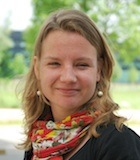 |
Anouk Tersteeg (1988) is an urban geographer at Utrecht University, Faculty of Geosciences. She will work as the Junior Researcher on DIVERCITIES. She obtained an interdisciplinary BSc in Bèta-Gamma studies and an MSc(Res) in Urban Studies at the University of Amsterdam. For her master thesis, she conducted a comparative study of resident experiences of social distances in newly-built, fine-grained, mixed-tenure housing projects in Amsterdam and Glasgow. She has also studied and conducted research in Bangkok, Thailand and Glasgow, Scotland. Her main research interests include urban regeneration, social mix, (ethnic) entrepreneurship, neighbourhood change and socio-spatial inequality.
|
|
BELGIUM: University of Antwerp
|
|
|
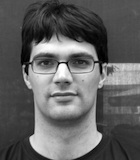
Stijn Oosterlynck (1979) is Assistant Professor in Urban Sociology at the University of Antwerp. He holds MAs in Sociology from Ghent University (2001) and Lancaster University (2002) and a PhD in Sociology from Lancaster University (2008). His research focuses on the politics of urban development, social urban renewal, solidarity in diversity and social innovation and the restructuring of the welfare state. He is involved in several research projects, amongst others the FP7 project Improve (Poverty reduction in Europe: Social policy and innovation) and DieGem (Diversity and Community Development).
|
|
|
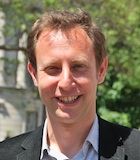
Gert Verschraegen (1973) is Assistant Professor of Sociology at the University of Antwerp. He studied Sociology, Philosophy and International Political Economy at the Universities of Leuven and Hull and received a PhD in Social Sciences (2000) from the University of Leuven. Before joining Antwerp University, he was a postdoctoral fellow of the Research Foundation Flanders (2003-2009) at the Centre for Sociological Studies (CeSO), KULeuven, Assistant Professor at CEPS-INSTEAD, Luxembourg (2001-2002) and a visiting fellow at the Minda de Gunzburg Center for European Studies, Harvard University (2009). His main research interests are in the fields of general sociology, cultural sociology and sociology of knowledge.
|
|
Danielle Dierckx (1973) is Director of the Policy Research Center on Poverty and Lecturer in sociology and social work at the University of Antwerp, Belgium. She is the promoter of many research projects at the Centre on Poverty, Inequality, Social Exclusion and the City (OASeS). Her research interests are situated in the fields of poverty, social inclusion, governance, policy analysis and the role of civil society organisations in the welfare state. She is a member of the COST Action on ‘welfare states, social services and place’ and of the EU-FP7-jury.
|
|
|
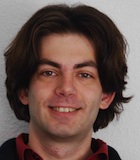
Arne Saeys (1981) holds MAs in Social & Cultural Anthropology (2007) and Psychology (2004), both from the University of Leuven. He is the Junior Researcher on the DIVERCITES project from the Belgian team. Previously, he has been an Early Stage Researcher at the Kadir Has University in Turkey (2007-2010) in the framework of the European research project The Integration of the European Second Generation.
|
|
DENMARK: Aalborg University
|
|
|
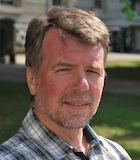
Hans Thor Andersen is Director of Research at the Danish Building Research Institute, Aalborg University and Head of Department of Town, Housing and Property. He finished his PhD-thesis in 1985 on urban theory and politics (University of Copenhagen) and received his habilitation in 2005. He was Director of the Centre for Strategic Urban Research at the University of Copenhagen 2005-2009.
|
|

|
Hedvig Vestergaard (1949) is a Senior Researcher at the Danish Building Research Institute, Aalborg University, CPH and part of the AAU team. She is a specialist in social housing and has research experience in housing and related subjects like urban regeneration, neighbourhood governance, social exclusion and everyday life. She has been a member of research teams working with troubled housing estates and deprived urban neighbourhoods. During 1996-2004, she was partner in EU 4th and 5th FP projects on social exclusion and neighbourhood governance. Her recent focus has been on developing joint Nordic-Baltic research initiatives and a new master programme on housing issues.
|
|
|
Rikke Skovgaard Nielsen (1982) is a Junior Researcher at the Danish Building Research Institute. She is currently finishing her PhD thesis, focusing on the housing careers of immigrants and descendants in the Danish housing market. The PhD project is nested within a Nordic research project thus employing a comparative approach. With a background in sociology, her research interests lie with the sociological aspects of housing, the housing market and settlement patterns of different groups. Rikke has a strong methodological research background working with both qualitative and quantitative methods as well as conducting mixed methods and comparative studies.
|
|
ESTONIA: University of Tartu
|
 |
Tiit Tammaru (1972) is the Coordinator of the DIVERCITIES Estonia team. He is a Professor of Population and Urban Geography at University of Tartu, Department of Geography. His current research focuses on social and ethnic differences in migration, housing and residential segregation in Estonia and other cities in Eastern Europe. |
 |
Kadri Leetmaa (1975) is a Junior Researcher on DIVERCITIES. She is a researcher in Human Geography at the Centre for Migration and Urban Studies, University of Tartu, Estonia. She holds an MSc in Human Geography (2005) and a PhD in Human Geography (2008) from the University of Tartu. Her main research fields have been related to urban social geography including migration and residential mobility, residential preferences, suburbanisation, urban planning and transition periods in post-socialist cities. She is currently on a four-year Estonian Science Foundation research grant on domains of inter-ethnic contacts and spatial segregation of ethnic groups in cities. |
|

|
Anneli Kährik (1974) is a Junior Researcher on DIVERCITIES. She is a researcher in Human Geography at the Institute of Ecology and Earth Sciences, University of Tartu and the Institute for Housing & Urban Research, University of Uppsala. Anneli holds a MPhil in Human Geography (1999) and a PhD in Human Geography (2006). Her current research focuses on urban spatial segregation, neighbourhood change, residential mobility, housing policy and the spatial impacts of urban governance. She has been involved in several international comparative projects, e.g. the EU 5th-Framework NEHOM project (Neighbourhood Housing Models), Open Society Institute’s LGI funded project on local government and housing in CEE countries, and nationally funded research projects in Estonia. |
|
|
| FRANCE: University Paris-Est Créteil |
|
|
|
|
Christine Lelévrier (1961) is an Urban Sociologist and Professor at the Paris Institute of Urban planning (UPEC) in charge of international relationships and of the European master Tackling metropolitan challenges in Europe. Her current research focuses on segregation, ethnicity, housing and social mix policies. Since 2011, she is an expert-member of the National Observatory of Urban Sensitive Zones (ONZUS) for the ministry of the city. She led a research program (2004-2011) on the social effects of urban renewal in France and worked on comparative European policies regarding social mix and housing (Spain, Germany, Portugal) in 2006.
|
|
GERMANY: Helmholtz Centre for Environmental Research – UFZ
|
|

|
Katrin Grossmann (1972) is an Urban Sociologist at the Helmholtz-Centre for Environmental Research in Leipzig since 2007. She received her PhD in 2006 at Philipps-University of Marburg with a thesis on normative frameworks within the governance discourse on urban shrinkage in Germany. Since then she engaged with the broader thematic field of sustainable urban development. These include neighbourhood change, especially post-socialist large housing estates, heat stress in urban areas, energy efficiency improvements, residential segregation and the governance of urban shrinkage. She is currently involved in research projects concerned with the interrelation between energy transitions and socio-spatial differentiation.
|
 |
Annegret Haase (1972) is an Urban Researcher at the Helmholtz Centre for Environmental Research – UFZ, in Leipzig, Germany since 2002. She received her PhD in 2000 examining the postsocialist transition and its regional pathway and peculiarities in southeast Poland. Until 2002, the focus of her research was on the development of border regions, transborder cooperation and national minority issues in East Central Europe. Since 2002, her main fields of research relate to comparative urban development with particular emphasis on trajectories of urban development with a focus on urban shrinkage, residential change, socio-spatial inequalities and governance issues as well as the impact of socio-economic and socio-ecological transformations on the urban space and society.
|
|
GREECE: National Centre for Social Research (EKKE)
|
|
|
Thomas Maloutas (1953) is the Co-Coordinator of the Greek team of DIVERCITIES. He is a Professor of Human Geography at the Department of Geography, Harokopio University and the Director of the National Centre for Social Research (EKKE). He studied Architecture and Geography in Paris. His research focuses on residential segregation, gentrification, housing and welfare regimes, and social stratification. He has participated in several EU projects (eg. the FP5 NEIGHBOURHOOD GOVERNANCE and the ESPON TIPSE [The Territorial Dimension of Poverty and Social Exclusion in Europe]) and has extensively published on the social geography of Athens.
|
|
|
Nicos Souliotis (1975) is Co-Coordinator of the Greek team of DIVERCITIES. He is a Researcher at the National Centre for Social Research, Athens. He holds a PhD in Sociology (Ecole des Hautes Etudes en Sciences Sociales, Paris, 2005). His research activity and publications focus on the relations of urban change, consumption and cultural economy and the recent transformations of urban governance in Athens.
|
 |
Michael Petrou (1968) is a researcher at the National Centre for Social Research, Athens. He holds a PhD in Social Anthropology (Panteion University of Social and Political Sciences, Athens, 2005). His research interests and publications focus on rural space and rural-urban relationships, particularly on the socioeconomic changes, multifunctionality and socio-spatial recomposition, migration movements and integration into host societies, identity and cultural renegotiations of social actors and rural conflicts in local government.
|
|

|
George Kandylis (1976) is a researcher at the National Centre for Social Research, Athens. He holds a PhD in Urban Social Geography (University of Thessaly, Volos, 2005). His research activity and publications focus on urban social structures, immigration and racism.
|
|
HUNGARY: University of Szeged
|
|
|
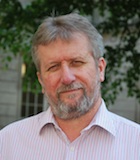
Zoltán Kovács (1960) is Professor in Human Geography and Head of Department, Economic and Social Geography at the University of Szeged. His scientific work mainly focuses on urban geography and social segregation with special attention to Budapest and other post-socialist cities. He has been the leader of several research projects funded by the Hungarian Scientific Research Fund (OTKA) and he was the Hungarian partner in various international research projects (e.g. URGE, NEHOM and ACRE) funded by the EU 5th and 6th Framework Programmes. He is the main representative of the Hungarian partner in the DIVERCITIES consortium.
|
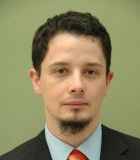 |
Lajos Boros (1976) holds a PhD in Urban Geography and Urban Theory (2008) and he is Assistant Professor at the Department of Economic and Social Geography, University of Szeged. His current research focuses on critical urban geography, socio-spatial exclusion and urban deprivation. He has experiences in international research as he participated in different research projects, for example RE-TURN – Central Europe 2013 program (Financial Manager, Researcher), POLYCE – ESPON (Financial Manager, Researcher) and HURO GEO PHD – Hungary-Romania Cross-Border Co-operation Programme (Lecturer, Professor).
|
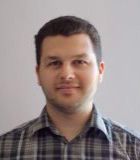 |
Szabolcs Fabula (1985) MSc graduated at the University of Szeged in 2009 as a Geographer specialised in urban and regional planning. He is currently Junior Research Fellow at the Department of Economic and Social Geography. He is about to complete his PhD dissertation in the field of critical disability geography. |
|
ITALY: University of Urbino Carlo Bo
|
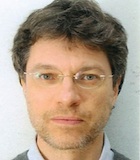 |
Yuri Kazepov (1962) is Principal Investigator of the DESP research unit and is Associate Professor of Comparative Social Policies and Urban Sociology. He directed the MA in Social Policy Management and the European Master in Comparative Urban Studies at the University of Urbino Carlo Bo, where he is also director of CRISEL (research and service center for e-learning). He has been Scientific Coordinator of the project Rescaling of Social Welfare Policy in Europe and Principal Investigator in several FP-funded research projects, mainly in the fields of welfare, governance and urban studies. He is the current President of RC21 on Urban and Regional Development of the International Sociological Association.
|
 |
Eduardo Barberis (1978) holds a post-doc position at the University of Urbino, where he lectures on immigration policies. He holds a degree in Sociology (2001) and a PhD in Urban and Local European Studies (2007). He took part in several national and international research projects including Rescaling Social Welfare Policies and Governance of Educational Trajectories in Europe – GOETE. He published extensively on immigrant entrepreneurship, immigrant participation and local dimension of social policy, which are his main research areas.
|
|
NETHERLANDS: Delft University of Technology (TUDelft)
|
|
|
Tuna Taşan-Kok (1970) is one of the founding members of the DIVERCITIES research network and member of the Scientific Steering Committee of DIVERCITIES. She holds an MSc in Regional Planning (1996) and a PhD in Urban Geography (2004). She has been working at TUDelft since 2007, and is Associate Professor of Human Geography (University College Roosevelt) where she coordinates the Human Geography Track. She is an expert on neoliberal urban development and multi-level governance issues. She has coordinated and conducted several international research projects, and involved in international research networks, such as the COST Action A26 (Cities between cohesion and competitiveness) as part of the Belgian representation.
|
|
POLAND: Polish Academy of Sciences
|
|
|
Ewa Karolina Korcelli-Olejniczak (1971) is Senior researcher at the Department of Urban and Population Studies IGSO PASc. She holds an MA in Linguistics from Warsaw University (1996) and a PhD in Urban Geography from the IGSO PAS (2004). Her current research is focused on comparative urban studies, local and regional development, metropolitan functions and regions and theoretical concepts within social sciences. She has participated in various international research projects including PLUREL; E-URBS, ESPON Best Metropolises and ReNewTown (Central Europe). She is the author and co-author of three books and 40 other publications in Polish and English and is also a scientific editor, interpreter and member of local development associations.
|
|
|
Grzegorz Weclawowicz (1943) is Professor at the Department of Urban and Population Studies IGSO PASc. His current scientific activity is focussed on the mechanisms of transformation in the spatial structure of cities in Poland and Central Europe, as well as regional and urban policies. Within this research, particular attention is devoted to social inequality in the intra-urban and regional scale and housing and social policies. He is the author of numerous books in social geography and urban social geography; a lecturer at various universities; an urban planner working for self-governments of large cities and a consultant for private companies, regional and central planning offices. He has been a participant and co-ordinator of numerous international research projects, most recently the ESPON BEST METROPOLISES and ReNewTown Central Europe.
|
|
|
Adam Bierzyński (1981) is Junior Researcher at the Department of Urban and Population Studies IGSO PASc. He holds an MA in Geography from Warsaw University (2006) and an MA in Spatial Economy from Warsaw University (2007). He is preparing a doctoral dissertation entitled: Changes in the structure of households in the space of Warsaw in the years 1988-2008. His current research is focused on urban studies, population geography, family and household demography and quantitative methods. He has participated in various international research projects including ReNewTown (Central Europe), CONdense (VolkswagenStiftung) and PROMINSTAT (6th Framework Programme).
|
|
SWITZERLAND: synergo Mobility-Politics-Space GmbH
|
|
|
Walter Schenkel (1963), partner at synergo, studied Political Science at the University of Zurich (PhD in 1998). He was Researcher at the Zurich Institute of Political Sciences and at the Institute of Public Administration, Erasmus University of Rotterdam. Besides evaluating, publishing and teaching in the fields of environmental, transportation and urban policies, he has been Project Manager in Swiss and international programs on urban development, social cohesion, federalism, and multi-level governance. As part of his involvement in Swiss political reforms in urban areas, he is Managing Director of the Zurich Metropolitan Conference since 2009.
|
|
|
Larissa Plüss (1980) works since 2013 as a Research Associate at synergo. In her dissertation in the field of political science, she investigated questions of governance and democracy at the local and the metropolitan level (PhD in 2013). During her PhD, she worked as a Scientific Assistant at the Institute of Political Sciences of the University of Zurich. Besides various research, teaching and publication activities, she gained wide experience in projects in the field of spatial development policy.
|
|
TURKEY: Middle East Technical University (METU)
|
|
|
Ayda Eraydin (1951) is Professor at the Department of Urban and Regional Planning at the Middle East Technical University, Turkey. She completed her PhD at Istanbul Technical University (ITU), post-graduate study at the London School of Economics and a BCP-MCP in Urban and Regional Planning at Middle East Technical University. She has been involved in various European Union funded projects and COST Actions and published various books and papers on the impact of neoliberal policies on urban areas, city regions, social capital social cohesion, urban governance and industrial clusters. She is the co-editor of the book Resilience Thinking in Urban Planning (2013) and is the founding member of Urban and Regional Research Network.
|
 |
Ismail Demirdag (1989) studied at the Istanbul Technical University from 2005 and graduated in 2011. In 2010, he studied at HafenCity Universität in Hamburg, Germany on an Erasmus Scholarship. Since 2012, he has been studying an MA at the METU and working there as Research Assistant.
|
 |
Nazda Güngördü (1989) is expected to hold her MSc in Regional Planning in 2014 from Middle East Technical University. She works as the Junior Researcher on DIVERCITIES. She is a city planner who graduated from Middle East Technical University as the 3rd top-ranking student. Her main research interests include development economics, local and regional governance, socio-spatial inequalities, regional development policies, industrial districts, knowledge economies and social cohesion.
|
 |
Özge Yersen (1989) received her BSc from the Middle East Technical University, Department of City and Regional Planning in 2012. Since 2012, she has been studying an MSc on Regional Planning at the Middle East Technical University. She works as the Junior Researcher on the DIVERCITES project. Her research interests include urban and regional growth and governance, urban policy planning, quantitative and comparative methods in urban and regional studies and regional integration policies.
|
|
UNITED KINGDOM: University College London
|
|
|
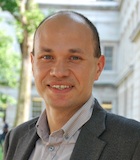
Mike Raco (1973) is Professor of Urban Governance and Development. He previously lectured at King’s College London and the Universities of Reading and Glasgow. His research interests are focused around the central theme of governing spaces, with a particular emphasis on democratic theory and governance, sustainable-city building, and urban communities.
|
|
|
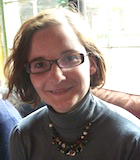
Claire Colomb (1978) is Senior Lecturer in Urban Sociology. Her research interests include urban governance, policies and politics; European spatial planning and territorial cooperation. In 2002-2004 she worked for the EU-funded INTERREG IIIB North-West Europe and in 2010-12 held an EU Marie Curie fellowship.
|
|

|
Jamie Kesten (1983) is a Research Associate at The Bartlett School of Planning. He will work as the Junior Researcher on DIVERCITIES. Jamie holds a BA (Hons) in American Studies from Brunel University (2004), an MSc in Ethnicity and Multiculturalism from the University of Bristol (2006) and a PhD in Multiculture, Community and Social Inclusion in New City Spaces from the Open University (2012). His research interests include ethnicity, race, multiculture and multicultural policy-making; community, place, belonging and social mix.
|
|
|
|
|
|
|
|
|